For many veterans, the transition from military life to civilian homeownership feels overwhelming, especially in a housing market that seems designed for sprawling mortgages and endless upkeep. Tiny homes for veterans are shifting that equation. These compact, purpose-built dwellings offer a practical path to affordable homeownership while accommodating the specific needs that many service members face. Unlike cookie-cutter apartments or traditional houses that demand constant maintenance, a well-designed tiny home can deliver independence, affordability, and peace of mind. Whether you’re a veteran exploring your first home purchase or helping a fellow service member find their next chapter, this guide walks through why tiny homes make sense for the veteran community and how to build or renovate one that truly fits your life.
Table of Contents
ToggleKey Takeaways
- Tiny homes for veterans eliminate financial barriers to homeownership by reducing mortgage costs, property taxes, utilities, and maintenance debt compared to traditional houses.
- VA loan guarantees allow eligible veterans to finance tiny homes with zero down payment and no mortgage insurance, making homeownership more accessible regardless of credit or savings.
- Accessibility-first design—including ADA-compliant ramps, wide doorways, roll-in showers, and adjustable countertops—ensures tiny homes accommodate service-connected disabilities from the start rather than requiring costly retrofits.
- Low-maintenance materials like vinyl plank flooring, metal roofing, and straightforward mechanical systems reduce the ongoing burden and unpredictability that many veterans want to avoid.
- Veteran-focused tiny home communities and nonprofit partnerships foster the camaraderie and peer support that mirrors military brotherhood while offering below-market pricing and job training.
Why Tiny Homes Are Ideal For Veterans
Tiny homes address several unique challenges veterans face when returning to civilian life. The financial barrier is the most obvious one: a mortgage on a 300-square-foot home costs a fraction of what a traditional 2,000-square-foot house demands. That means lower property taxes, reduced utilities, and minimal maintenance debt, all crucial for veterans managing service-connected disabilities or transitioning careers.
Beyond the budget, tiny homes offer psychological benefits that align with military culture. Veterans often appreciate straightforward design, minimal clutter, and spaces that are easy to maintain and secure. There’s no yard that demands constant attention, no sprawling rooms to heat or cool, and no hidden repair surprises lurking in walls. That predictability and control matter.
Accessibility is another key advantage. Many tiny homes can be designed from the ground up with mobility in mind, something far more difficult and costly to retrofit in older houses. Wide doorways, roll-in showers, and accessible kitchens aren’t afterthoughts, they’re built in from day one. Also, tight communities built around tiny home parks often foster the camaraderie and mutual support that many veterans crave after leaving military brotherhood.
Government Programs & Funding Options
Several federal and state programs exist to help veterans purchase or build tiny homes. The VA loan guarantee program allows eligible veterans to finance a home with no down payment, and tiny homes, whether on permanent foundations or wheels, often qualify if they meet local building codes. Unlike FHA loans, VA financing doesn’t require mortgage insurance, which saves thousands over the life of the loan.
The HUD-VASH program (Housing and Urban Development Veterans Affairs Supportive Housing) provides rental vouchers for very low-income veterans, though it’s focused on rentals rather than ownership. Some states and nonprofits offer down payment assistance or grants specifically for veteran homebuyers. Organizations like Veterans Village and Wounded Warrior Project sometimes partner with builders to offer tiny homes at reduced rates or with grants attached.
State and local incentives vary wildly. California, Oregon, and several other states have begun relaxing zoning restrictions on accessory dwelling units (ADUs) and tiny homes, which lowers development costs and opens more locations for placement. Always check your county or municipality’s regulations on tiny home placement, foundation requirements, and whether your local lender will approve financing for a tiny home, some still balk at unconventional properties.
Tax credits exist too. If you’re building a new tiny home, energy-efficient appliances and insulation may qualify for federal tax credits. Work with a VA-savvy lender or a nonprofit housing advisor before committing to a purchase: they’ll know what programs apply in your state.
Essential Design Features For Veteran-Friendly Tiny Homes
Accessibility & Mobility Considerations
Designing a tiny home that works for veterans with service-related injuries or disabilities requires intentional planning. Start with the fundamentals: entrance ramps should have a 1:12 slope (1 inch of rise per 12 inches of run, per ADA standards), doors should be at least 34 inches wide clear of the frame, and hallways need a minimum 36-inch width to accommodate wheelchairs.
Bathroom layout is critical. A walk-in shower with no threshold, grab bars rated for 250 pounds, and a bench-height toilet make a massive difference. Countertops in kitchens should be adjustable or set at 34 inches high (standard is 36 inches) to accommodate seated users. Include pull-out shelving in lower cabinets and avoid tall, hard-to-reach storage. Wheelchair accessible tiny homes demonstrate how thoughtful design preserves space while ensuring full independence.
Lighting matters too. Veterans with vision issues or those navigating at night benefit from motion-sensor lights, higher-lumen LED bulbs, and switches placed at 48 inches high. Climate control should be straightforward: a programmable thermostat prevents temperature swings that can aggravate certain injuries.
Low-Maintenance Layouts & Materials
Maintenance burden is a hidden killer for homeowners. Choose materials that are durable and easy to clean: polished concrete or vinyl plank flooring instead of carpet, porcelain tile in wet areas, and low-VOC paints that are easier to touch up. Avoid complicated trim work, decorative soffits, or materials that rot easily, every element should earn its keep.
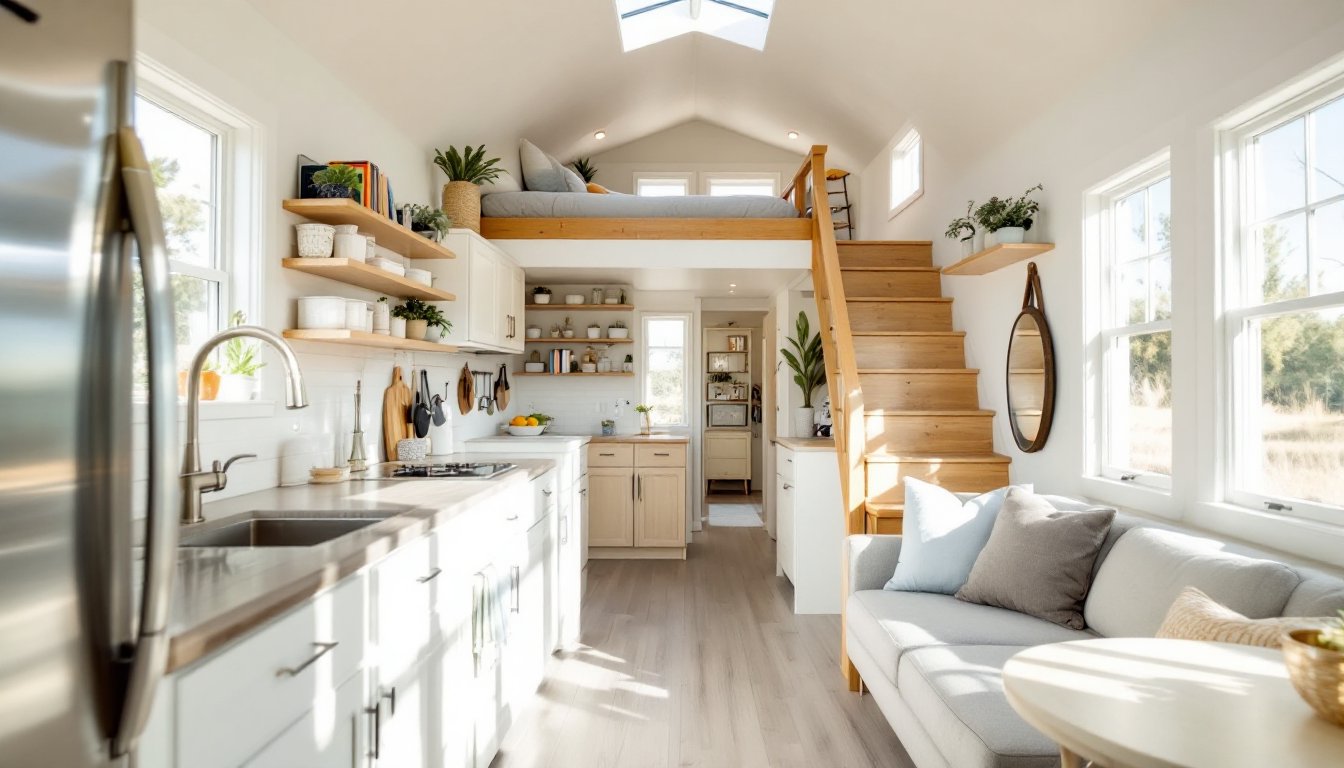
Layout should minimize wasted hallway space and create open sightlines, which makes the home feel larger and lets you monitor the entire space from a single vantage point, a preference many veterans cite. Combine the living and kitchen areas: one efficient bathroom beats two half-baths that soak up square footage and plumbing complexity. Storage is vital but must be built-in and accessible: think pull-out pantries, wall-mounted shelving, and undersized closets that don’t demand ladder access.
Mechanical systems should be simple and central. One HVAC zone, a standard water heater, and a straightforward electrical panel all reduce the learning curve and troubleshooting stress when something breaks. Consider durability: metal roofing lasts 40+ years compared to asphalt shingles at 15–20, and that long-term payoff matters on a fixed income.
Building & Renovation Tips For Tiny Home Projects
Before breaking ground, confirm that your local jurisdiction permits tiny homes and what foundation type they require. Some areas mandate permanent foundations: others allow trailers or pier-and-beam. Building codes vary by state and county, and this step isn’t optional, a structure built without permits becomes nearly impossible to sell or insure.
Start with accurate measurement and a detailed floor plan. Tiny homes leave zero room for guessing: every inch counts. Use graph paper or free software like SketchUp to verify that your furniture, appliances, and fixtures actually fit before ordering materials. This is where most DIY tiny home projects stumble.
Frame with standard 2×4 lumber and 16-inch on-center spacing, same as any house. The smaller footprint doesn’t excuse structural shortcuts. Install a proper vapor barrier and insulation, tiny homes heat and cool rapidly, so quality insulation (R-15 minimum for walls, R-30+ for attic) isn’t luxury, it’s necessity. Seal every penetration around electrical outlets, pipes, and vents with acoustic caulk to prevent drafts.
Mechanical rough-in (plumbing, electrical, HVAC) is where mistakes multiply in tight spaces. Run supply lines and drain stacks before framing interior walls if possible. Use PEX tubing instead of copper for plumbing, it’s cheaper, faster to install, and forgiving in tight quarters. Electrical should follow NEC standards: most tiny homes can run on a single 200-amp service, but confirm with your local inspector.
Interior finishes: drywall is standard, but moisture-resistant drywall in bathrooms and kitchens prevents mold. Paint with zero-VOC primers and paints to keep air quality high in a compact footprint. Flooring should be glued down or mechanically fastened: floating floor systems can feel unstable in a small home. Professional help is worth it for plumbing and electrical if you’re not experienced, these are where permit violations and safety issues hide.
Communities & Resources For Veteran Homeowners
Veteran-focused tiny home communities are growing. Several nonprofits, including Team Red White & Blue and the Veterans Community Care program, partner with developers to create intentional tiny home villages where veterans live near each other, share resources, and foster mutual support. These communities often offer below-market pricing, job training, and peer counseling alongside housing.
Online communities and forums like the Tiny Home Industry Association and veteran-specific housing boards offer peer advice and contractor recommendations. Resources on affordable home design show how other communities are solving housing challenges: lessons from one region often apply elsewhere.
For renovation advice, the VA’s Home Modification program can sometimes cover accessibility upgrades if you’re service-connected and meet income limits. Local Habitat for Humanity chapters increasingly build tiny homes and welcome veteran volunteers and homeowners. Your regional VA office should have a housing benefits specialist who can walk you through financing options and connect you with approved lenders.
The Angi platform and similar contractor networks let you vet local builders and plumbers who have experience with tiny home projects. Check references carefully, inexperienced contractors can turn a budget-friendly project into a money pit fast. Finally, tiny homes in California and other high-growth regions have established best practices and supplier networks that make sourcing materials faster and cheaper.