
Tiny houses have taken the world by storm, proving that good things really do come in small packages. But let’s face it, living in a shoebox can feel a bit chilly—unless you’ve got the right insulation. Proper insulation isn’t just a luxury; it’s the secret sauce that keeps those cozy vibes flowing, no matter the weather outside.
Overview of Tiny House Insulation
Tiny house insulation plays a crucial role in ensuring comfort and efficiency. Effective insulation maintains a stable indoor climate, helping tiny homeowners stay comfortable regardless of outside conditions.
Importance of Insulation in Tiny Homes
Proper insulation in tiny homes establishes energy efficiency and minimizes heating costs. Insulation prevents heat loss during winter, enabling a warm atmosphere without excessive energy use. Maintaining a consistent temperature enhances comfort, creating an inviting space. Additionally, soundproofing contributes to a peaceful living environment, mitigating external noise from nearby roads or neighbors.
Types of Insulation Materials
Several insulation materials suit tiny house construction and enhance energy efficiency. Foam board insulation offers high thermal resistance while being lightweight, making it a popular choice. Fiberglass batts provide excellent coverage and adaptability for various spaces. Spray foam insulation creates an airtight seal and excels in spaces with unusual shapes or gaps. Cotton insulation, made from recycled materials, also provides an eco-friendly option. Reflective insulation works by reflecting radiant heat, suitable for hot climates where overheating can be an issue.
Evaluating Insulation Options
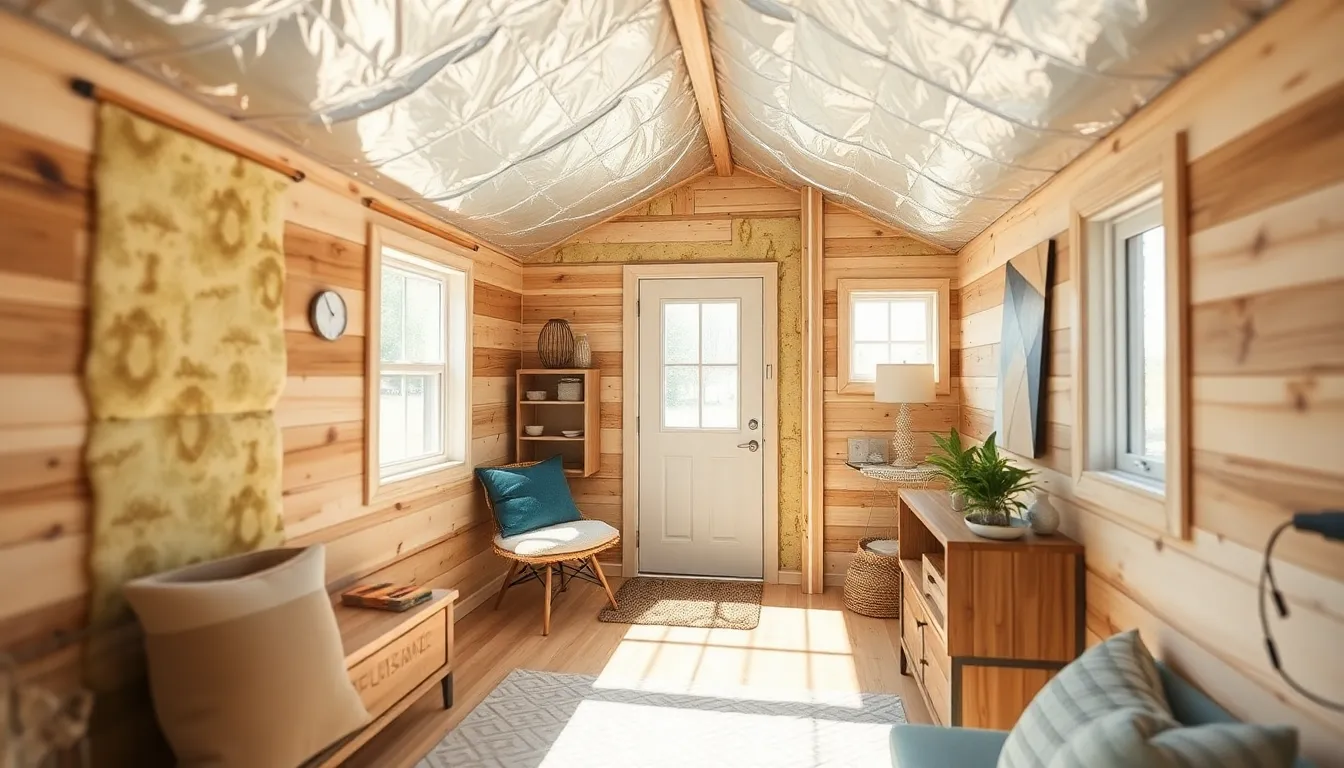
Proper insulation is critical for tiny homes. Evaluating insulation options helps determine the best fit for comfort and energy efficiency.
Reflective Insulation
Reflective insulation excels in hot climates. It reflects radiant heat away from the living space, keeping interiors cooler during warm months. Installation often involves attaching reflective materials to roofs and walls, maximizing benefits. Space-saving is another advantage, as reflective insulation typically requires less thickness compared to other types. This can preserve valuable square footage in tiny homes.
Foam Board Insulation
Foam board insulation offers high thermal resistance. Rigid panels are easy to cut and fit into walls, roofs, and floors. This insulation material helps minimize air leaks, enhancing energy efficiency. Many choose foam boards for their lightweight nature and moisture resistance. Using foam boards can significantly reduce heating costs, making it a popular choice among tiny house builders.
Spray Foam Insulation
Spray foam insulation provides exceptional coverage. It expands upon application, filling cracks and gaps that traditional insulation might miss. This feature enhances air sealing, improving energy efficiency and indoor air quality. Many opt for spray foam for its ability to create a continuous barrier against moisture and pests. While it typically costs more upfront, the long-term savings on energy bills justify the investment.
Installation Techniques
Selecting the right installation technique is crucial for maximizing insulation efficiency in tiny houses. Effective methods enhance comfort and energy savings.
DIY Insulation Tips
Choose appropriate materials that align with individual skills. Foam board and fiberglass batts are manageable options for DIY enthusiasts. Preparing the area by sealing gaps reduces air leaks and improves insulation performance. Measure and cut insulation precisely for a snug fit. Use adhesives and fasteners as recommended by manufacturers to secure materials properly. Finally, wear protective gear while handling materials to ensure safety.
Professional Installation Considerations
Hiring professionals can ensure accuracy and maximize insulation benefits. Experts understand local building codes and weather conditions, providing tailored advice. Evaluate credentials and experience before selecting an installer. Ensure they offer a warranty for the insulation materials and craftsmanship. Scheduling installation during off-peak seasons may result in lower costs and increased availability. High-quality workmanship prevents future issues, safeguarding the integrity of the tiny home.
Cost Considerations
Tiny house insulation requires careful financial planning. Proper budgeting ensures adequate insulation capabilities, leading to comfort and energy efficiency.
Budgeting for Insulation
Material costs differ significantly among insulation types. Foam board typically ranges from $0.50 to $2 per square foot. Fiberglass batts often fall between $0.75 and $1.50 per square foot. Spray foam, while providing superior coverage, generally costs $1 to $3 per board foot, reflecting its higher performance. Additionally, labor expenses for installation can add to the overall budget. DIY projects offer cost-effective solutions, yet professional installation guarantees expert results in compliance with building codes. Evaluating resources early and prioritizing necessary materials can optimize spending.
Long-Term Savings
Investing in quality insulation leads to substantial long-term savings. Effective insulation minimizes energy bills by retaining heat during winter and cooling during summer. Homeowners may notice savings of 20% or more on heating and cooling costs annually. This reduction in expenses contributes to faster returns on initial insulation investments. Additionally, enhanced comfort levels reduce reliance on heating and cooling systems, further decreasing utility costs. The right insulation choice can yield significant energy efficiency improvements, making it a wise financial decision for tiny home occupants.
Conclusion
Choosing the right insulation for a tiny house is vital for comfort and energy efficiency. With various materials available each offering unique advantages homeowners can tailor their choices to fit their specific needs. Proper installation techniques further enhance insulation performance ensuring a cozy living space year-round.
Investing in quality insulation not only improves indoor climate but also leads to significant long-term savings on energy bills. As tiny homes continue to gain popularity understanding insulation options will empower owners to create sustainable and comfortable living environments. Prioritizing insulation is a smart step towards maximizing the benefits of tiny house living.